


After her husband suddenly disappeared and all contact with him was lost, Umm Naji, a woman in her forties, found herself facing a harsh life she had never experienced before, along with the immense challenge of protecting her family and meeting their needs.
With no other option, Umm Naji—who lives in a rural area of Al-Dhalea Governorate in central Yemen—turned to her brothers to secure a land from her father’s inheritance, enabling her to start an agricultural project that could shield her from poverty and dependence on others.
She devoted all her effort to reclaiming the land, giving it her full time and attention. She planted the central area with seasonal crops such as maize, lentils, and beans, while allocating the edges for pomegranates, guava, and figs.
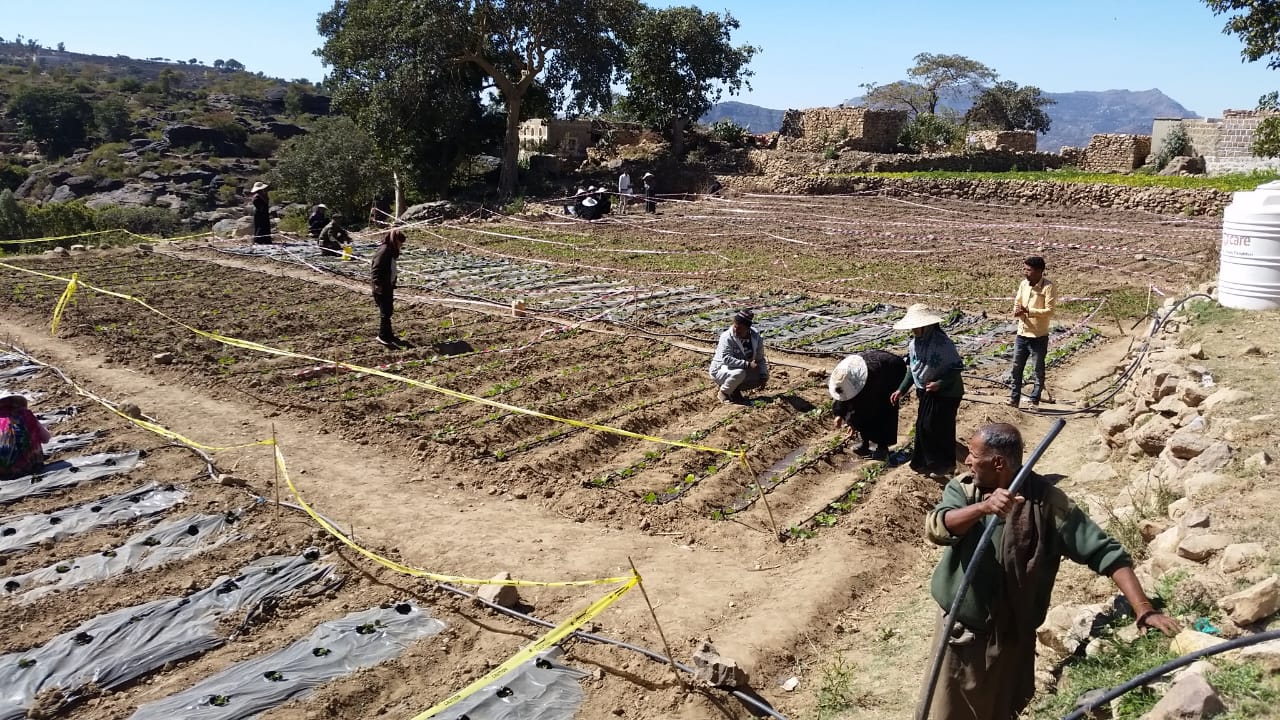
Receiving support from the Food and Agriculture Organization (FAO) marked a major turning point in her project. It provided her with additional motivation to continue and move forward, while helping her increase agricultural production.
Since launching the project in 2016, her dedication has enabled her to achieve self-sufficiency and sell a significant portion of her crops and fruits, according to her.
Determination to Succeed
Women-led agricultural projects are no longer merely routine activities; they have become a means of survival and a source of income that alleviates poverty and strengthens household food security.
Despite limited resources and marketing challenges, many women continue to manage these projects with strong determination, seeking to reshape their economic and social roles.
Dina Abdullah Saeed from Taiz Governorate represents another successful example. After her husband’s death, she began her journey without sufficient land, but worked to secure additional space with support from members of her community.
Dina told Yemen Platform: “In the first season, I cultivated a small area, but later expanded to grow potatoes and legumes. I achieved self-sufficiency for my family and began marketing my products to meet my children’s needs and complete building our house, which had stopped after my husband passed away.”
Despite her hard work in farming and land management, Dina faces significant challenges in marketing her products and securing fair prices that cover production costs.
Reshaping Roles
Amid Yemen’s economic crises, women’s agricultural projects have emerged as a vital space that has strengthened women’s presence in society, enhanced their independence, and improved their sense of psychological security and self-worth.
Social researcher Dr. Salem Al-Shamsi told Yemen Platform that women-led agricultural projects have created a noticeable shift in women’s status within both the family and society. They have moved beyond traditional roles to become direct contributors to production, partners in decision-making, and influential in setting spending priorities.

At the community level, these projects have helped reduce women’s isolation, strengthen self-production, diversify food sources, and contribute to stabilizing food supplies, according to Al-Shamsi.
Insufficiently Designed Support
Despite the expansion of women’s agricultural projects, their future remains dependent on the availability of genuine and sustainable support that ensures women’s economic empowerment.
Warda Al-Sayed, Coordinator of Rural Women’s Economic Empowerment Projects at a microfinance institution, noted that rural women still face clear marginalization in empowerment and capacity-building programs. They often receive only limited support within family-based agricultural or livestock projects, which prevents women from securing independent and sustainable income sources.
She emphasized the importance of providing direct support to women to guarantee their right to income, aligning projects with local market needs, and directing assistance toward sustainable initiatives.
She added that some interventions, such as water projects, have improved women’s lives by saving time and enhancing access to education and protection, but they remain insufficient for achieving real economic empowerment.
Government Interventions
Eng. Abdulmalik Naji, Deputy Minister for the Production Sector at the Ministry of Agriculture in Aden, expressed optimism about the future of women’s agriculture. He highlighted the expansion of projects implemented by the government in cooperation with international organizations.
These interventions include establishing home gardens, greenhouses, and distributing livestock and poultry to families.
Naji also pointed to training programs targeting women in various fields, including beekeeping, aimed at enhancing their capacities, empowering them economically, and increasing their contribution to agricultural production.
Despite the limited scale of women-led agricultural projects and the lack of sufficient support, current models have transformed the reality of many families. They have acted as a line of defense for food security and contributed to both economic and psychological stability.
These projects have not only provided livelihoods for families who lost their sources of income, but have also given many women a renewed sense of hope—like Umm Naji, whose small project enabled her to continue and rely on herself despite the harsh conditions she faced, as she describes.
