


For days, Aziza has been confined to her bed in a displacement camp in Yemen’s Hodeidah governorate. She is physically weak and exhausted, struggling with poor nutrition and the emotional strain of living without stability or basic necessities.
Aziza, whose name has been changed to protect her identity, lives in a camp in Hays district. Her health began to deteriorate after she developed heavy, persistent bleeding. Without access to adequate medical care or sanitary pads, her condition has worsened.
Her experience reflects a wider problem facing displaced women who cannot afford menstrual products and are forced to rely on pieces of cloth instead, often without the water and facilities needed to wash and dry them safely.
“I couldn't complete my treatment because of my family's financial situation,” Aziza says. “What makes things worse is that we don't have nutritious food, clean water or sanitary pads. Women in these camps don't even have the most basic privacy.”

Aid That Falls Short
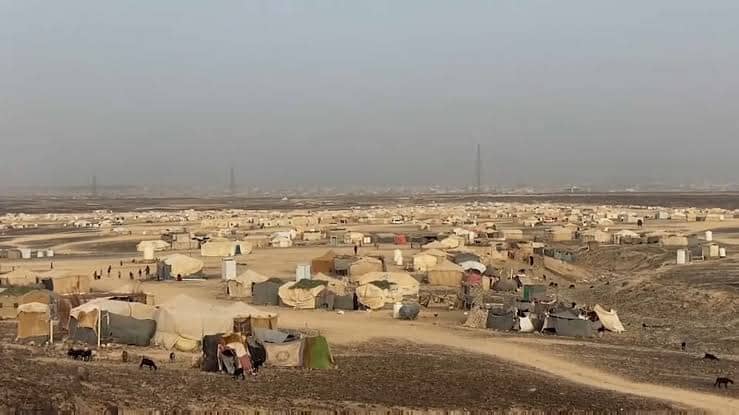
According to Yemen's Central Statistical Organization, more than 1,950 families have been displaced in Hays district, Hodeidah governorate. Many have ended up in camps with inadequate shelter and poor living conditions, having fled their homes with little money and few clothes.
Women and girls in these camps face particularly difficult conditions. Humanitarian assistance is limited, clean water is scarce, and many experience what is known as period poverty — the inability to access menstrual products because of financial constraints or a lack of supplies.
Sanitary pads are rarely included in the assistance displaced women receive. Most cannot afford to buy them, leaving them to use pieces of cloth as substitutes, often in conditions that increase the risk of infections and other health complications.
Jamala Bashbash, a reporting officer with the Executive Unit for Internally Displaced Persons in Hays district, says that dignity kits, intended to provide women with essential personal hygiene items, are distributed only once when families are first displaced.
The kits are not provided regularly, and their contents vary depending on the organisations distributing them and the funding available.
As a result, women are left without reliable access to essential hygiene supplies, while the gaps in humanitarian assistance continue to widen.
Forced to Rely on Pieces of Cloth
With sanitary pads beyond their reach, many displaced women and girls repeatedly use old pieces of cloth during their periods, even when they have no reliable means of washing or disinfecting them.
Dr Samira al-Taizi, an obstetrician and gynaecologist, warns that poor menstrual hygiene in these conditions can lead to serious health problems, particularly when women cannot wash themselves properly or change their menstrual materials regularly because of water shortages.
“Symptoms of vaginal fungal and bacterial infections include itching, foul-smelling discharge and a burning sensation during urination,” al-Taizi tells Yemen Platform.
She explains that inadequate hygiene can create conditions in which bacteria thrive, increasing the risk of infections that may lead to further complications.
“If bacteria spread from the vagina to the uterus, they can cause a range of health problems, including lower abdominal pain and fever,” she says. “Repeated infections can also have serious consequences for a woman's fertility.”
Dr Noha Ahmed, an obstetrics and gynaecology specialist in Hodeidah, also warns of the health risks associated with prolonged use of contaminated menstrual materials.
She raises particular concern about toxic shock syndrome (TSS), a rare but potentially fatal condition caused by bacterial toxins entering the bloodstream. She cautions that prolonged use of contaminated cloth may expose women to additional health risks.

Too Few Toilets, Too Little Privacy
The lack of sanitary pads is only one part of the problem. For displaced women in Hays, limited sanitation facilities and the absence of separate toilets for women make managing their periods and meeting basic personal hygiene needs even more difficult.
Privacy is almost impossible in some camps. Women must use toilets located far from their shelters, often without proper doors, locks or lighting.
Some deliberately reduce the amount of water they drink to avoid having to use these facilities, particularly at night when the journey can feel unsafe. This leaves them at greater risk of dehydration.
Jumana Bashbash identifies several obstacles to improving sanitation conditions in the camps.
Chief among them is the severe shortage of funding needed to build and maintain toilets and water networks. Overcrowding has also placed existing facilities under considerable strain, while the distance between shelters and toilets, combined with inadequate lighting, creates additional safety and protection concerns for women and girls.
“There have been some individual and coordinated initiatives in camps such as Al-Jasha and Bani Jaber, where a private toilet has been provided for each family,” Bashbash tells Yemen Platform.
“A water desalination facility has also been established to serve both camps. But these are only partial solutions, and they fall far short of meeting the enormous needs of displaced families.”
She explains that the Executive Unit for Internally Displaced Persons is largely limited to conducting field assessments and reporting needs to local and international humanitarian organisations.
Without its own independent funding, the unit has little capacity to address these shortages directly. The absence of effective emergency plans has left major gaps in essential services.
An Urgent Need for Action
For women displaced by conflict, losing their homes and possessions is only the beginning of their difficulties. Poor living conditions, insecurity and prolonged psychological stress can also affect their physical and reproductive health.
Amat al-Aleem al-Ahdal, an official with the Executive Unit for Internally Displaced Persons in Hays district, says that the lack of privacy and adequate facilities leaves many women feeling embarrassed, anxious and unable to go about their daily lives freely.
These conditions restrict their movement and undermine their confidence, making even routine personal needs a source of distress.
Dr Samira al-Taizi calls for an urgent response to improve the health and living conditions of women and girls in displacement camps.
She says sanitary pads should be distributed regularly as part of essential hygiene supplies, alongside clean water, soap and other cleaning products.
Women also need access to medical treatment for infections, fungal conditions and heavy bleeding, as well as iron supplements for those experiencing significant blood loss.
Al-Taizi stresses the importance of awareness campaigns that help women and adolescent girls understand the risks associated with unsafe menstrual practices and the measures they can take to protect their health.
She also calls on the authorities to introduce personal hygiene and healthcare programmes, and to establish safe, enclosed sanitation facilities that provide women with the privacy they need.
For displaced women in Hays, these are not luxuries. They are basic necessities that remain out of reach, leaving women and girls struggling to manage their health and preserve their dignity in camps where even a private toilet or a sanitary pad cannot be taken for granted.
