


In the work of Yemeni photographer and filmmaker Abdulrahman Al-Ghabri, a photograph often feels like a frame lifted from a longer film. A single image, yet one dense with movement, memory, and human detail.
For Al-Ghabri, the camera has always been a tool for storytelling: stories of people, faces, and places he has documented over more than five decades.
Born in 1956, Al-Ghabri’s artistic sensibility was shaped through music, acting, and film directing. He first picked up a camera in the early 1970s, beginning a long journey across Yemen, documenting villages, cities, and faces that, at times, seemed to disappear before history itself could fully record them.
He studied media and film directing in Lebanon, but his attachment to still photography remained constant. Over the years, he became one of the leading figures associated with Yemen’s visual memory, holding more than 85 exhibitions inside and outside Yemen, while dedicating much of his career to defending artists’ rights and intellectual property.
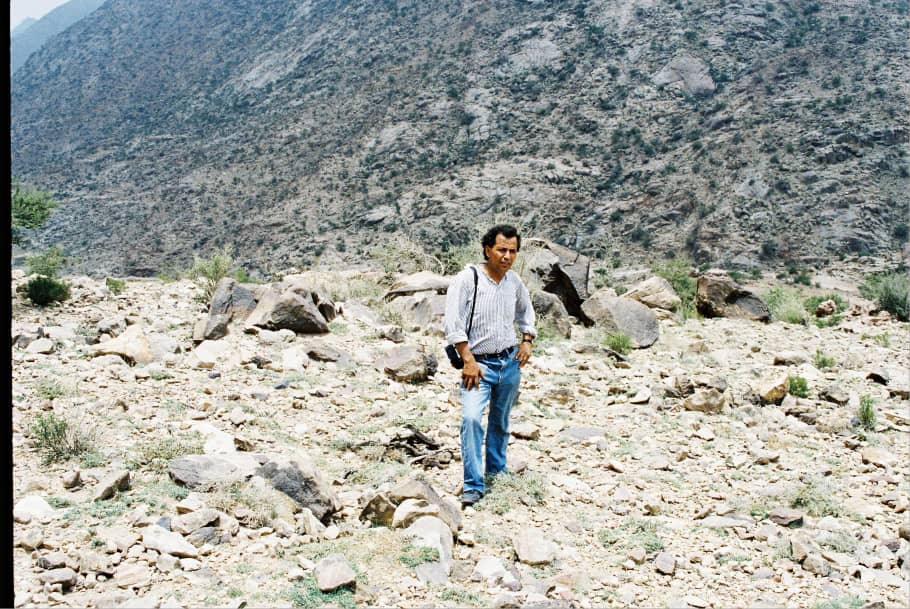
From Cinema to Photography
When Al-Ghabri speaks about the relationship between cinema and photography, he describes them almost as one art form expressed through two different mediums.
He recalls his early fascination with silent films, especially the works of Russian director Sergei Eisenstein and his landmark film Battleship Potemkin.
Al-Ghabri says: “I fell in love with both photography and cinema from the very beginning in 1968, and I never saw any fundamental difference between them except the type of film being used. Because I started as a photographer, I excelled in film directing. I understood early on that framing, angles, and the expressive focal point within an image carry deep meanings — meanings only someone with visual culture can truly grasp.”
He believes his studies in film directing gave him a different understanding of still imagery, treating every frame as though it were a condensed cinematic scene.
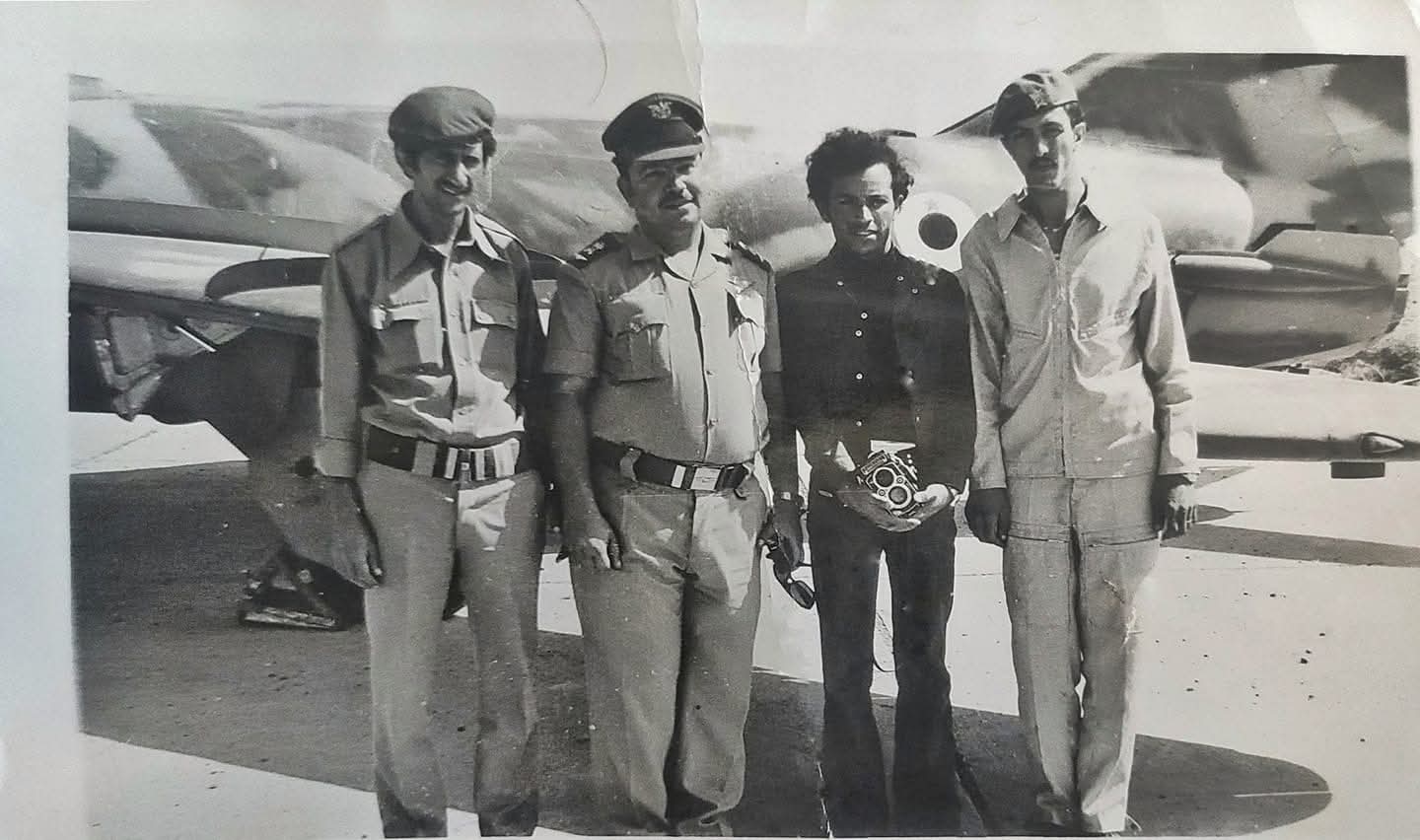
The Image as a Complete Story
Photography offered Al-Ghabri an alternative space for storytelling in a country where the film industry never fully developed.
He did not wait for actors, shooting locations, or production budgets. Instead, he went directly into the streets, mountains, markets, and villages, transforming fleeting moments into complete narratives.
He explains: “In photography, when a talented photographer captures a moment, they have already created a complete screenplay. The image may appear silent, but it speaks in more than one language. Here, the photographer becomes the protagonist of the story — the one who writes the scenario while leaving the viewer free to interpret it through their own visual understanding.”
For Al-Ghabri, the most successful photograph is not one that explains everything directly, but one that leaves space for interpretation.
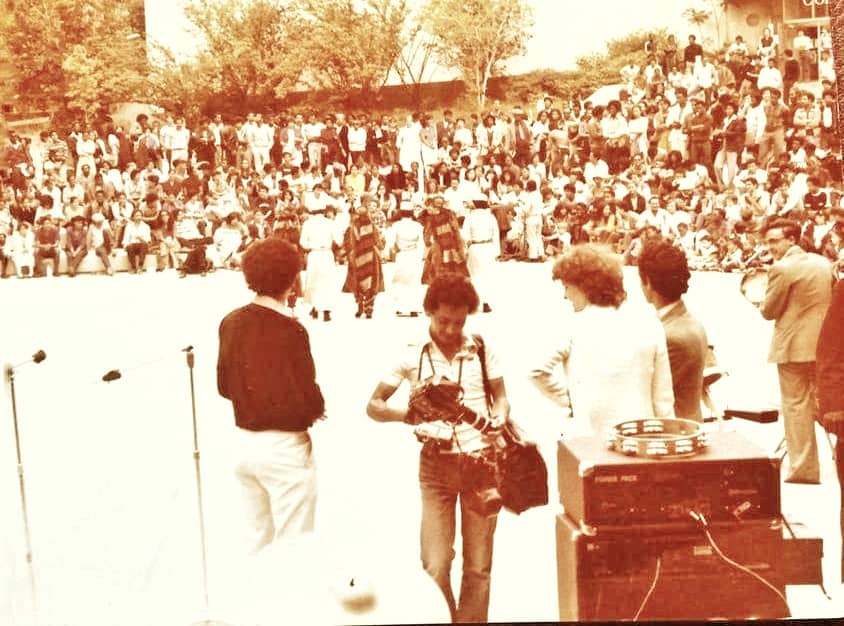
Light… The True Protagonist of the Image
Whenever he discusses photographic technique, Al-Ghabri always returns to one essential element: light.
For him, light is not merely a tool for visibility; it is what shapes the personality and emotional atmosphere of an image. Through light alone, he says, a person can appear gentle or severe, humble or imposing.
He explains: “Light is what grants an image its aesthetic identity. Through the photographer’s intelligence, light can transform a person into a beautiful hero or into a harsh, intimidating figure — simply through the lines of light they choose.”
He describes the act of photographing as a deeply personal state that combines patience, stillness, and artistic intensity: “Photography is a moment… and a kind of madness unique to the artist. It is madness, patience, deep pleasure, and complete calm all at once.”
Perhaps that is why the Yemeni landscape appears so alive in his work. Mountains, faces, old markets, and even harsh, dry places all carry a sense of drama shaped by light and shadow.
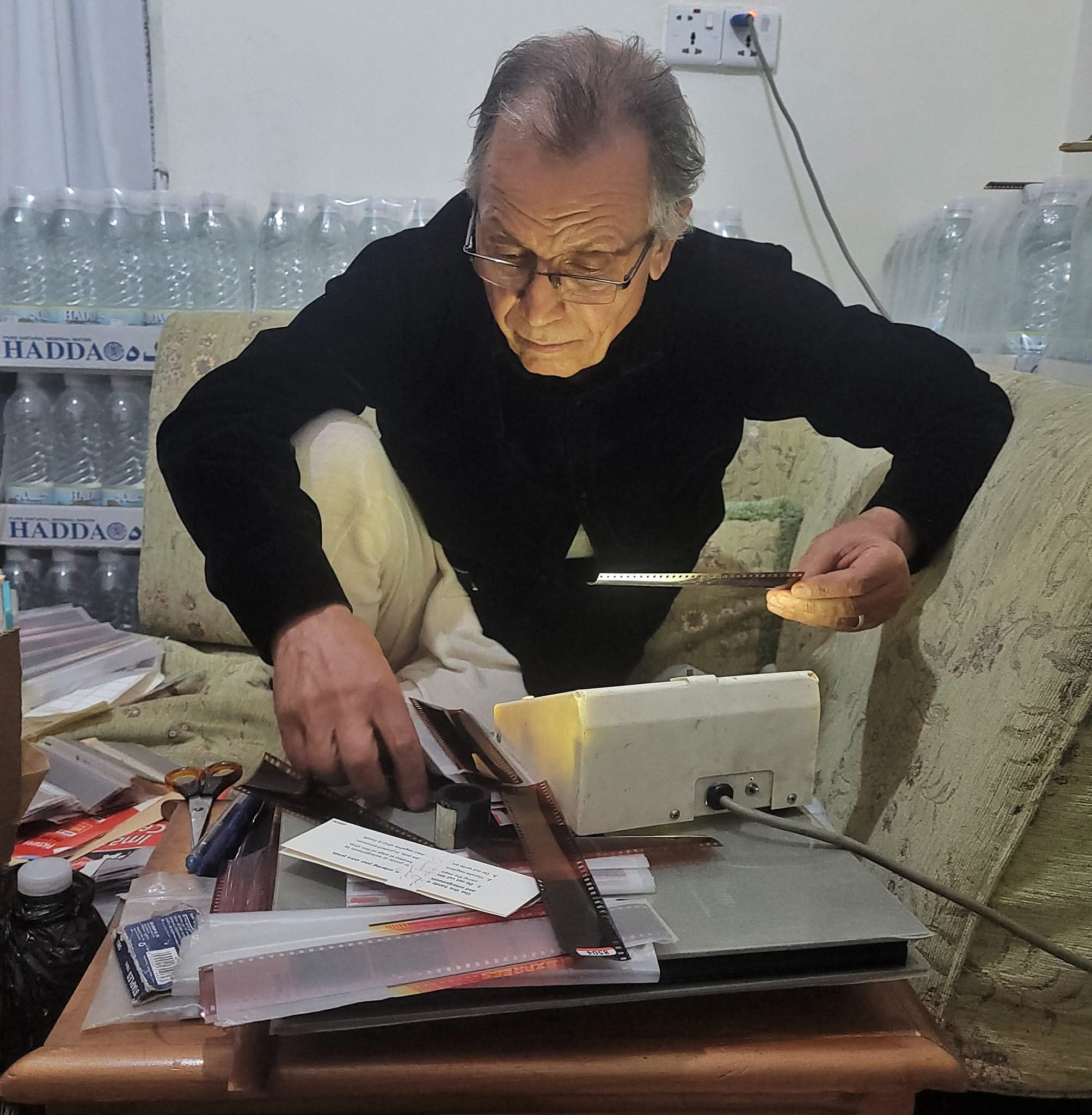
Capturing the Unscripted Moment
Al-Ghabri has little interest in overly staged photographs or in treating people as “models.”
He prefers observing people as they naturally are, in spontaneous and unguarded moments.
He says: “I do not arrange the image. I hunt for expressions in the face and eyes. That is why the person I photograph becomes the hero of their own story… and of mine as well.”
As for photojournalism, Al-Ghabri believes technical skill alone is not enough. A photographer, he argues, must also possess political and cultural awareness.
He adds: “A photojournalist must be well-read and conscious of what is happening around them, because understanding reality is an essential part of capturing the true moment.”
Yemen’s Visual Memory
Over decades, Al-Ghabri’s lens has documented Yemen’s social and cultural transformations: changing styles of dress, evolving cityscapes, the details of daily life, and even the way faces themselves change with time.
For him, photography is not simply an archive — it is living testimony.
He says: “The photograph is the judge in the courtroom. It is the proof of the story, and the lawyer defending the truth.”
