Language

en


Investigation
Yemen Platform tracked 19 inheritance cases brought by women in Yemen’s courts. Judges upheld the family endowment in 11 of them. Only three ended with the endowment struck down in the women’s favor, even though Yemeni law has banned using endowments to dodge inheritance rules since 1992.
In Mudhaykhira, a district in Ibb governorate in central Yemen, three sisters, Qubool, Mukhlis and Bahiya Abdu Ahmed Abdu, went to court to claim their share of their late father’s estate. They saw the inheritance as theirs by right under Islamic law. It was kept from them for one reason: they were born women.
The sisters sued their nephew, Abdulwahid Mohammed Abdu Ahmed, demanding that the family’s land, trees and buildings be divided, and that he account for the he had collected over the years. His defense rested on a single word: waqf. The land, he argued, was a , a family endowment known locally as , which custom and old practice reserve for the men of the family.
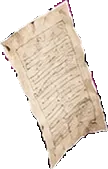
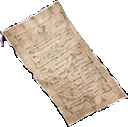
Court rulings obtained by Yemen Platform trace the case through three courts. In July 2002, the Mudhaykhira Court of First Instance issued ruling No. 7. The Ibb Court of Appeal upheld it in July 2007 with ruling No. 186. In April 2009, the Supreme Court in Sana’a rejected the sisters’ final appeal and fined them 10,000 Yemeni rials.
Throughout, the sisters tried to prove that the disputed land had belonged outright to their father and was not an endowment that blocked inheritance. All three courts disagreed. They confirmed the endowment status of several plots, describing them as old qira’a endowments, some more than 120 years old, that had never been challenged or annulled. The courts relied on Article 46 of the Islamic Endowment Law. The nephew’s written reply to the lawsuit was blunt: the land was “an old qira’a endowment” that had stood for “hundreds of years,” and it was “for males, not females.”
The Mudhaykhira case: three courts, seven years
From the first ruling to the Supreme Court’s rejection of the sisters’ appeal
Source: copies of the rulings obtained by Yemen Platform. Names are redacted in the documents we publish.
What the sisters finally won was the right to a share of the land’s harvest for as long as they live, an arrangement known locally as , literally “a living.” They cannot own the land, divide it or pass it on to their children. Yemen Platform contacted the nephew for comment. He declined to speak.
The Mudhaykhira case is not an exception. Tracking 19 cases through Yemeni courts, this investigation found that judges upheld the endowment and rejected the women’s claims in 11. In only three was the endowment voided in the women’s favor, despite a law that, since 1992, has prohibited using an endowment to get around the rules of inheritance.
The investigation reviewed rulings in hundreds of endowment cases across 57 courts.
This investigation opens one of the most sensitive social and legal files in Yemen: a quiet struggle that many Yemeni women live with, between an inheritance right guaranteed by Islamic law and a body of custom and endowment deeds that still keeps them from their fathers’ and grandfathers’ estates.
Through field visits and remote interviews with officials and judges in 57 courts across 15 governorates, Yemen Platform reviewed rulings in hundreds of endowment cases and followed 19 cases brought by women through the courts. It examined dozens of judgments and case files and interviewed affected women, judges, lawyers and social experts. The picture that emerged is of endowments turned into long-running family feuds, in which women are usually the weaker party, and in which custom outweighs the law.
Scope: 57 courts in 15 governorates
March 2025 to July 2026. Tap a governorate to see how it was covered.
Governorate boundaries are approximate. Case markers show districts. Source: the investigation’s methodology.
Endowment lands make up an estimated 20 percent of all land in the areas controlled by Yemen’s internationally recognized government, according to Dr. Wadhah al-Shabhi, deputy minister for endowments in that government. They include (waqf khayri), dedicated to public good causes and spent as the founder specified, and family endowments, whose income goes to members of a family who cannot own the property itself.
Most endowment property lies in the north, al-Shabhi says. Sana’a governorate tops the list, where endowments are estimated to cover about half of all land. In a southern governorate such as Shabwa, the figure is under 1 percent.
How much land is endowed?
Share of endowment land (charitable and family combined), by area
Source: estimates by Dr. Wadhah al-Shabhi, deputy minister for endowments in the internationally recognized government. Each share is of that area’s own land; these are estimates, not official surveys.
These figures do not separate charitable from family endowments. But the cases this investigation followed show how some family endowments have been used to keep land in the hands of sons and away from daughters, on the argument that a married daughter would carry it out of the family.
In Hodeidah, on Yemen’s Red Sea coast, three sisters, Baraka, Jamala and Jabra Ahmed Hussein Abkar, found themselves written out of the family estate in the same way. For more than 20 years after their father died, the farmland stayed in the hands of their brother, Yusuf, who kept its income for himself while the sisters lived in hardship.
Between 2005 and 2008, their case moved from the Zabid Court of First Instance to the Hodeidah Court of Appeal, which sent it back to Zabid to rule on the sisters’ remaining claims, and then to the Supreme Court in Sana’a, which in March 2008 rejected Yusuf’s appeal and confirmed that the case should return to Zabid. Yusuf’s defense rested on the age of the endowment and on deeds he said governed part of the property. According to the last ruling Yemen Platform reviewed, the sisters, like Qubool, Mukhlis and Bahiya, came away with nothing more than al-ma‘washa, though they insisted the endowment had been used to cheat them.
The Zabid case: a ruse acknowledged, the endowment upheld
The case moved through three courts between 2005 and 2008
Source: copies of the rulings obtained by Yemen Platform.
The most striking line in the file comes from the trial court itself. In ruling No. 29, issued in December 2005, the Zabid court wrote that “the endowment is established beyond doubt, and it contains a ruse to deprive the women.” Yet it ruled that the must be respected, and only ordered Yusuf to pay his sisters the equivalent of their share of the harvest. Yusuf told the court the estate had been divided 25 years earlier and that his sisters had already received and spent their share.
“The endowment is established beyond doubt, and it contains a ruse to deprive the women.”
Zabid Court of First Instance, Ruling No. 29, December 2005.
The court nonetheless ruled to respect the founder’s conditions.

Disputes settled behind closed doors, before they ever reach a judge.
Legal experts and judges in the 57 courts covered by this investigation estimate that only about 2 percent of disputes over family endowment land ever reach a courtroom.
Estimate Only about 2% of disputes over family endowment land ever reach a courtroom, according to legal experts and judges.
An estimate, not an official statistic: no records exist of disputes settled outside the courts. Each dot is one dispute in a hundred, according to judges and experts in the 57 courts covered.
A survey the author conducted among 25 women from al-Dhale, Ibb, al-Bayda and Lahj, all denied an inheritance through a family endowment, found that most would rather stay silent than fight a legal battle that could cost them their family ties and their standing in the community. They fear being accused of stirring up conflict and breaking with custom, and of losing the brothers they count on for protection. The sample is small and does not represent all affected women, but it reflects patterns that recurred across the testimonies this investigation gathered.
Survey conducted by the author in 2026. The sample is small and does not represent all affected women.
Some women believe they have no right to this kind of inheritance at all, and that taking any of its income would bring a curse on them and their children, even illness or death. Others see no point in suing, because they do not expect justice from the courts.
These accounts suggest that the cases in court are only a small part of the problem. Many more stay behind closed doors, where women’s rights are quietly folded away and disputes are settled before they ever reach a judge.
Judge Jiyab al-Hadi, head of the Juban court in al-Dhale governorate, agrees. Women going to court over endowed property is a relatively recent phenomenon, he says. For a long time, many avoided it because of deep-rooted beliefs that endowment property is untouchable, or that managing an estate is men’s business.
Although most endowment land lies in the north, the General Authority for Endowments in Sana’a has received only 12 endowment cases filed by women since it was founded in early 2021, according to Yusuf al-Madani, director general of wills and endowments at the authority.
Al-Madani says the authority takes every complaint seriously. Where violations are proven, cases are referred to the public funds prosecution or the endowments prosecution, and anyone found to have seriously damaged an endowment is removed and replaced by a trustworthy member of the founder’s descendants.
A note on institutions: since the war began, Yemen’s judicial and administrative bodies, including the endowments ministry and its agencies, have been split between the internationally recognized government and the authorities in Sana’a, and courts answer to one or the other depending on who controls the area. The key rulings in the Mudhaykhira and Zabid cases were issued between 2002 and 2009, before that split.
A law that bans the ruse, and an exception that shields old endowments.
Yemen Platform’s analysis of court documents shows that 11 of the 19 cases (58 percent) ended with judges upholding the endowment and rejecting the women’s claims. Only three (15.8 percent) ended with the endowment voided in the women’s favor. Another three (15.8 percent) were resolved through tribal mediation in which the women gave up their claims. In one case (5.3 percent), the women won only the right to use the land, not to own it; in another (5.3 percent), they won a ruling that could not be enforced.
What happened to 19 cases brought by women
Each square is one case, based on Yemen Platform’s analysis of rulings and documents
Source: Yemen Platform’s analysis of rulings in 19 cases in which women sued for their share of endowed property and won or lost at one or more levels of the courts. The shares describe these cases and do not represent all endowment disputes.
The numbers, and the testimony of judges and lawyers, point to a gap between what the law says and what custom does. On paper, the law is clear that an endowment may not be used to cheat heirs. In practice, the road back to that right is still blocked by legal and social obstacles.
The Islamic Endowment Law No. 23 of 1992 was the first law to regulate endowments after Yemen’s unification in 1990. It set out to correct practices that had helped disinherit women, and it gives a woman the right to reclaim her share and to benefit from endowment income. Article 16 states that an endowment is invalid if it is made to escape a debt or a pre-emption right, or as a ruse to get around the rules of inheritance. Article 17 bars anyone with heirs from endowing more than a third of their property.
The law goes further. Article 33 declares void any endowment made to oneself, to one’s heirs or to one’s descendants, with limited exceptions.
What does the 1992 Islamic Endowment Law say?
Three articles that restrict family endowments
An endowment is invalid if made to escape a debt or a pre-emption right, or as a ruse to get around inheritance rules.
No one with heirs may endow more than a third of their property.
An endowment to oneself, to one’s heirs or to one’s descendants is void, with limited exceptions.
Islamic Endowment Law No. 23 of 1992. Texts summarized.
Yemen is not the only Arab country to have confronted the problem. Syria abolished family endowments in 1949, and Egypt followed in 1952 with Law No. 180, which ended endowments for anything other than charity.
Lawyer Jalal Handad says the family endowment began, in Islamic jurisprudence, as a way to protect a family’s wealth, but in some cases became a tool for keeping its benefits among the men. The endowment law placed clear limits on it, he says, but left exceptions for old endowments that are 40 years old or more, or that have been settled by court rulings or by agreement among the beneficiaries.
That exception is . It allows old family endowments whose terms conflict with the law to stand if courts have ruled them valid, if the heirs have accepted them, or if 40 years have passed, and they can be dissolved only with the consent of most of the beneficiaries. In a written response to Yemen Platform, al-Shabhi said lawmakers kept the exception to protect settled rights after generations of inheritance, and because the deeds of many old endowments have been lost, making their validity impossible to prove.
Article 46: how an old endowment survives
The exception the courts relied on in the Mudhaykhira case
Any one of three conditions is enough
Courts have ruled it valid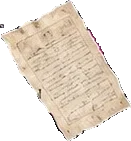 The heirs have accepted it
 40 years have passedtrue of most family endowments in Yemen
It can be dissolved only with the consent of most beneficiaries, who are usually the men who benefit from it.
Islamic Endowment Law No. 23 of 1992, Article 46.
Dr. Abdulrab al-Rushdi, director general of legal affairs at the endowments ministry in the internationally recognized government, takes a firmer line. In principle, he says, family endowments are no longer permitted under the endowment law, and any endowment used to evade inheritance rules or deprive heirs is void by force of law. The affected woman does not have to prove a ruse or bad faith, he argues: a family endowment that breaches the law loses its legitimacy as soon as its nature is established, and the property must return to the estate and be divided according to the shares set by Islamic law.
The rulings and case files gathered for this investigation show a messier reality. The ministry and the law say family endowments are void except where the law makes an exception. Yet courts in several governorates continue to settle inheritance disputes on the strength of old family or qira’a endowments, and some rulings have kept those endowments in place because of their age, because earlier judgments made them binding, or because they fall within the legal exceptions.
The law speaks of protecting women’s rights and forbids depriving them. But the women who spoke to the author say that, in practice, many still cannot reach those rights, whether because of the weight of custom, the difficulty of proof or the years a case can take.
The debate today, then, is less about the text of the law than about how it is applied: the gap between what laws and rulings promise and what women actually face when they claim their rights, at home or in court.
A settlement that ends the feud, but not the injustice.
In the Juban district of al-Dhale governorate, two sisters, identified here by their initials, Z.A. and A.A., fought a long legal battle for their share of their father’s farmland, about 200 , or roughly 8,888 square meters. After their father died, their two brothers took over the land and kept the sisters from their share and its income. Yemen Platform is using only the sisters’ initials to protect their safety.
The brothers claimed the land was a family endowment, a qira’a, which custom and old law reserve for men. The sisters sued in the Juban Court of First Instance for their share and challenged the endowment deed, noting that their father was elderly and blind when the land was turned into an endowment.
The case dragged on. Worn down by the fight, the sisters agreed to tribal mediation.
According to their lawyer, Farouq al-Masrafi, the dispute ended in a tribal settlement that ended the open feud between the siblings but did not give the sisters what they had gone to court for. The agreement did not cover the endowed land and assets, which stayed with their brothers’ sons under the conditions handed down in the family.
On paper, the case was closed. The core of the dispute was not. The sisters came away with their share of the family’s , the property that was not endowed, while their share of the endowed property stayed out of reach. Their story shows how some inheritance battles end in settlements that keep the peace in the family but leave women feeling that what is theirs is still suspended between custom and endowment.
Their share of the freehold land
Their share of the endowed property, which stayed with their brothers’ sons
The disputed land covers about 200 libna, roughly 8,888 square meters. Source: lawyer Farouq al-Masrafi, the sisters’ legal representative.
Yemen Platform reached one of the sisters’ nephews. He denied that the family had taken his aunts’ rights, and stopped talking after he was shown the share the court had set for them.
While women speak with anguish about what was taken from them, and ask how a woman of the same family can be forced into court to prove a right granted by her faith, the beneficiaries of family endowments defend the system fiercely.
Mus’ad Abdullah, a community notable in al-Dhale, insists the issue is not about depriving women of their inheritance. It is about preserving a custom handed down for generations, he says, and keeping the land in the family so that it is not broken up.
“Tishtu tikasiru ‘urfna?” he shouts angrily in the local dialect. “You want to break our custom?” What has been practiced for generations must continue as it is, he says, and changing these inherited rules would open the door to wider conflict in the community.
تشتوا تكسروا عرفنا
“You want to break our custom?”
Mus’ad Abdullah, a community notable in al-Dhale, defending the endowment systemHis view reflects a broader outlook among some men who benefit from endowments, in which custom is the final authority over family relations and property, even where it conflicts with legal or judicial interpretations that give women broader rights. Its defenders call it a way of protecting the land and keeping it in the family. Women who have lost out say the same arguments have become a tool to strip them of rights they believe are guaranteed by both Islamic law and Yemeni law.
The cost of being disinherited goes beyond a lost plot of land or a lost source of income. It reaches a woman’s sense of her place in her family, and her sense of fairness, belonging and safety. Behind the court files and endowment deeds are women who were let down by their own families.
I thought they were my support and my safety. I was forced to accept the settlement and give up my rightful share.Z.A.Z.A., Juban district, al-Dhale. We withheld her name to protect her safety.
Sadness crosses Z.A.’s face as she tries to describe what it felt like to be wronged by the people closest to her. Her voice breaks. What she lost, she says, was more than money or land.
“Losing the inheritance that would have helped me through hard times was painful,” she told Yemen Platform, “but harder still is a woman’s feeling that she has been wronged by those closest to her. I thought they were my support and my safety. I was forced to accept the settlement and give up my rightful share.”
What she wants, she says, is not only her share back but a change in the reality many women live with: that no other woman should have to go through what she did, and that society should understand that claiming an inheritance is neither a breach of custom nor a rebellion against the family, but a right under religion and under human dignity.
Social researcher Dr. Salah al-Haqab says custom puts many women in front of a cruel choice: stay silent and give up their right, or face the judgment of their community and the accusations that can follow a woman simply for claiming what religion and law grant her. The real damage of these cases, he says, goes well beyond the legal dispute.
Men’s control over estates and family decisions, along with weak legal awareness, has entrenched practices that now seem socially normal, al-Haqab says, even though they contradict women’s legal and religious rights.
Psychologist Dr. Rania Khaled says that disinheriting a woman under cover of an endowment leaves deep psychological scars that can last for years. Feeling excluded and betrayed by her family erodes a woman’s self-worth and her trust in those around her, and leaves her with a lasting sense of injustice.
Many women, Khaled says, are caught in a painful conflict between keeping their family ties and defending their rights, which drives some to give up or stay silent rather than lose their families.
The harm does not stop with the woman herself, she adds. It extends to her children and to the whole family, often leaving siblings estranged and turning relationships meant to rest on solidarity and support into ones marked by tension, suspicion and bitterness.
And in a society that may brand a woman who claims her rights as rebellious or a troublemaker, the psychological burden doubles. Claiming her share stops being an ordinary legal step and becomes a personal and social battle that she pays for over years.
The endowment law did curb the use of endowments to sidestep women’s inheritance after it was passed, and it brought justice to some. But it did not end the problem. Most family endowments are old, and they have left a long line of victims; the law itself recognizes an endowment as valid once it is 40 years old or has been upheld by earlier rulings.
In his written response, al-Shabhi acknowledged that this exception “has in practice become a legal cover protecting abuses,” because most family endowments in Yemen are more than 40 years old.
This exception has in practice become a legal cover protecting abuses.
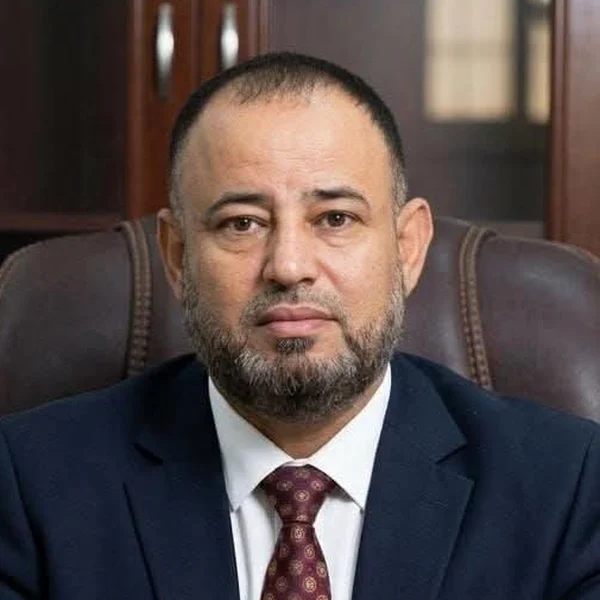 Dr. Wadhah al-Shabhi, deputy minister for endowments
And although the law does not require an affected woman to prove a ruse, according to al-Rushdi, courts in practice still ask victims to prove that the founder intended to cheat the heirs, in cases that can stretch back decades, which is very hard to do. In the Mudhaykhira case, the trial court reasoned that the sisters’ representative had “not proven” that the land was their father’s outright property. On top of that, cases take years of litigation and costs that victims cannot afford, and the law leaves the management of endowments in the hands of men.
The fix, as lawyers propose it, is not to abolish old endowments, but to separate an endowment’s validity from accountability for how it is run.
Many lawyers are not calling for old endowments to be unsettled. They want the validity of an endowment separated from accountability for how it is run. The solution, al-Shabhi says, is that “the endowment remains valid after 40 years, but oversight and accountability of the and the harvest continue, and never lapse.”
“The endowment remains valid after 40 years, but oversight and accountability of the trustee and the harvest continue, and never lapse.”Dr. Wadhah al-Shabhi
More than 20 years after Qubool, Mukhlis and Bahiya filed their lawsuit in Mudhaykhira, all that remains to them of their father’s estate is al-ma‘washa: a share of the harvest set by the court “for the duration of their lives.” The land stayed with their nephew. As for Z.A., all she wants now is that no other woman should have to pay the price she paid.
If you, or a woman you know, were denied an inheritance through an endowment, you can contact the Yemen Platform team in confidence through the contact page on our site. We will not publish anything without your consent.
We correct any error in this investigation and note the correction and its date at the foot of the page. To report an error, contact us through the contact page on our site.

Khadija Khaled Al-Jasri is an independent Yemeni journalist with a law degree from Sana’a University. Her investigative work covers human rights, women’s rights, corruption and public accountability, as well as the environment, climate change and the social and economic pressures on Yemen’s most vulnerable communities. Her investigations and reports have appeared in local and regional Arab media.
All stories by the author →